The Two Failures That Define Healthcare Software
A hospital in Delhi NCR deploys a new patient portal. Patients can book appointments online, view reports, and pay bills. Adoption is strong. Six months later, a patient discovers that their lab report—including a sensitive diagnosis—was visible to another patient who shared the same phone number. The portal had used phone number as the sole identity key.
This single design decision created a medical data breach. In healthcare software, two failures matter more than any other: a missed appointment and a leaked medical record. The first is a revenue and operational problem. The second is a permanent breach of trust, a regulatory violation, and potentially a threat to the patient's safety.
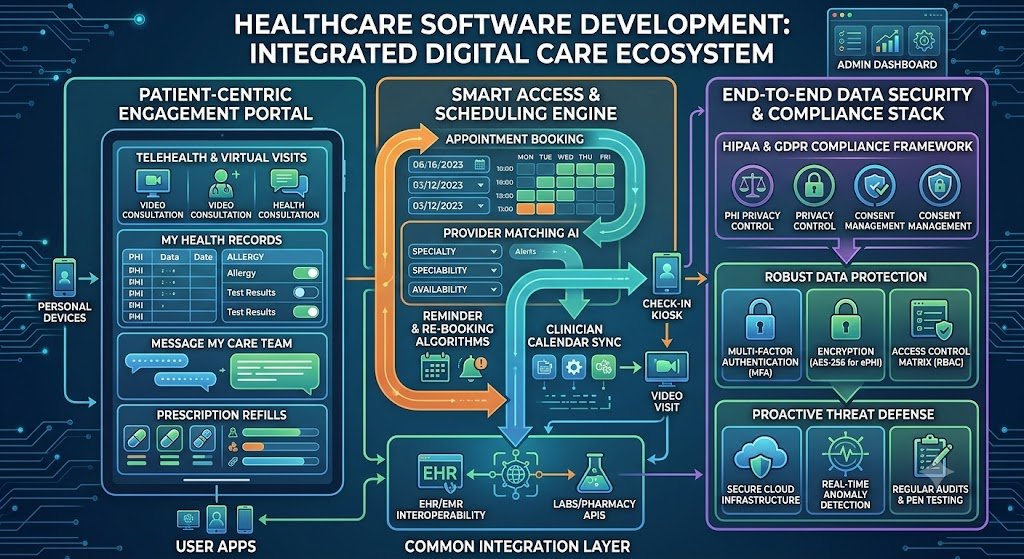
Healthcare software development is the discipline of building systems that avoid both failures: patient portals that give patients access to their own data securely, scheduling systems that reduce no-shows and optimise clinician time, and data security that meets the standards of medical confidentiality.
India's healthcare software landscape is evolving rapidly. The Ayushman Bharat Digital Mission (ABDM) is building national digital health infrastructure—health IDs, consent-based data sharing, and interoperable records. The DPDP Act classifies health data as sensitive personal data with heightened obligations. NABH accreditation requires specific documentation and quality processes. And the clinical reality—multiple specialties, lab systems, pharmacy, billing, insurance—means healthcare software is inherently complex.
The stakes are high and the market is real. Indian hospitals, clinics, diagnostic labs, and telemedicine platforms are investing in digital infrastructure. But the failure modes are severe: data breaches, regulatory penalties, clinical errors caused by bad software, and loss of patient trust.
This guide is written for Indian hospital administrators, clinic owners, healthcare founders, and CTOs evaluating healthcare software. We will cover the architecture for patient portals and scheduling, the data security requirements, ABDM and DPDPA compliance, real costs in rupees and dollars, and a phased implementation framework with clear go/no-go gates.
What Makes Healthcare Software Different
Healthcare software differs from general software in four structural ways.
1. Medical Data Is the Most Sensitive Category
Health data reveals diagnoses, treatments, medications, and reproductive health. A breach is not just a data loss—it can lead to discrimination, stigma, and harm. Under the DPDP Act, health data is sensitive personal data requiring heightened protection.
2. Clinical Safety Depends on Software
A scheduling system that double-books a surgeon, an EHR that loses a medication order, or a lab system that mismatches a sample with a patient can cause direct clinical harm. Software reliability is a patient safety issue.
3. Interoperability Is Mandatory
Healthcare involves multiple systems: hospital information systems, laboratory information systems, radiology systems, pharmacy systems, and insurance systems. These must interoperate—often using standards like HL7, FHIR, and DICOM.
4. Regulatory and Accreditation Requirements
NABH accreditation, ABDM standards, DPDPA obligations, and clinical establishment regulations all shape the software requirements. Compliance is not optional.
Healthcare vs General Software Table
| Dimension | General Software | Healthcare Software |
|---|---|---|
| Data sensitivity | Personal data | Sensitive personal data (health) |
| Safety impact | UX issues | Clinical safety |
| Interoperability | Optional | Mandatory (HL7, FHIR, DICOM) |
| Compliance | DPDPA | DPDPA + ABDM + NABH + clinical regulations |
| Testing | Functional | Functional + clinical + security |
For teams building the secure integration layer and AI features that healthcare requires, our AI Development and Custom Software Development practices cover the full stack.
Patient Portals: Secure Access to Personal Health Data
The patient portal is the patient's window into their healthcare. It must be secure, usable, and accessible to patients with varying digital literacy.
Core Features
1. Secure authentication. Patients must be able to log in securely. Options: ABHA number (Ayushman Bharat Health Account), OTP-based login, or username/password with MFA.
2. Appointment management. View upcoming and past appointments, book new appointments, reschedule, and cancel.
3. Reports and records. View lab reports, radiology reports, prescriptions, and discharge summaries.
4. Consent management. Under ABDM, patients control who can access their health records. The portal must support consent granting and revocation.
5. Payments. View bills and pay online.
6. Communication. Secure messaging with the care team, appointment reminders, and health tips.
The Identity Problem
The most common and most dangerous design mistake in Indian patient portals is using phone number as the sole identity key. In Indian families, phone numbers are often shared. A patient portal that grants access based on phone number can expose one family member's medical records to another.
The correct design: Use a unique patient identifier (patient ID, ABHA number, or a combination) plus authentication (OTP, password, or biometric). Never grant access based solely on a phone number or date of birth.
Consent and ABDM
ABDM's consent framework allows patients to control access to their health records across providers. The portal must support:
Consent artefact creation: the patient grants consent for a specific purpose, duration, and data type.
Consent revocation: the patient can revoke consent at any time.
Consent audit: all consent actions are logged.
Portal Feature Table
| Feature | Patient Value | Security Requirement |
|---|---|---|
| Authentication | Access to own data | Unique ID + OTP/MFA, no phone-only |
| Appointments | Convenience | Linked to verified identity |
| Reports | Transparency | Encrypted, access-controlled |
| Consent | Control over data | ABDM consent framework |
| Payments | Convenience | PCI DSS via gateway |
| Communication | Engagement | Secure messaging |
Appointment Scheduling: Reducing No-Shows and Optimising Clinician Time Scheduling is the operational backbone of any healthcare provider. A good scheduling system increases utilisation, reduces wait times, and reduces no-shows.
Core Features
1. Multi-channel booking. Patients book via portal, app, WhatsApp, phone, or walk-in.
2. Real-time availability. Slots reflect actual clinician availability, not a static schedule.
3. Multi-resource scheduling. Appointments require a clinician, a room, and sometimes equipment. The system must check all resources.
4. Reminders and confirmations. Automated reminders via SMS and WhatsApp reduce no-shows.
5. Rescheduling and cancellation. Self-service rescheduling reduces administrative load.
6. Waitlist management. When a slot opens, the system can offer it to waitlisted patients.
7. Queue management. For walk-in patients, a token system with estimated wait times.
Reducing No-Shows
No-shows are a significant revenue loss for Indian healthcare providers. The most effective interventions:
Reminders: SMS and WhatsApp reminders 24–48 hours before the appointment.
Confirmation: requiring confirmation to hold the slot.
Deposit: for high-value appointments (specialist consultations, procedures), a small deposit reduces no-shows.
Overbooking: carefully calibrated overbooking to compensate for expected no-shows (requires data).
Scheduling Architecture Table
| Component | Function | India-Specific Consideration |
|---|---|---|
| Availability engine | Real-time slot calculation | Multi-resource (clinician, room, equipment) |
| Booking interface | Patient and staff booking | WhatsApp, portal, walk-in |
| Reminders | Reduce no-shows | SMS, WhatsApp |
| Queue management | Walk-in patients | Token system, wait time estimate |
| Waitlist | Fill cancelled slots | Automated offers |
Data Security: The Non-Negotiable Requirement
Medical data security is the most important requirement in healthcare software. A breach is not just a compliance issue—it is a violation of patient trust that cannot be undone.
Security Architecture
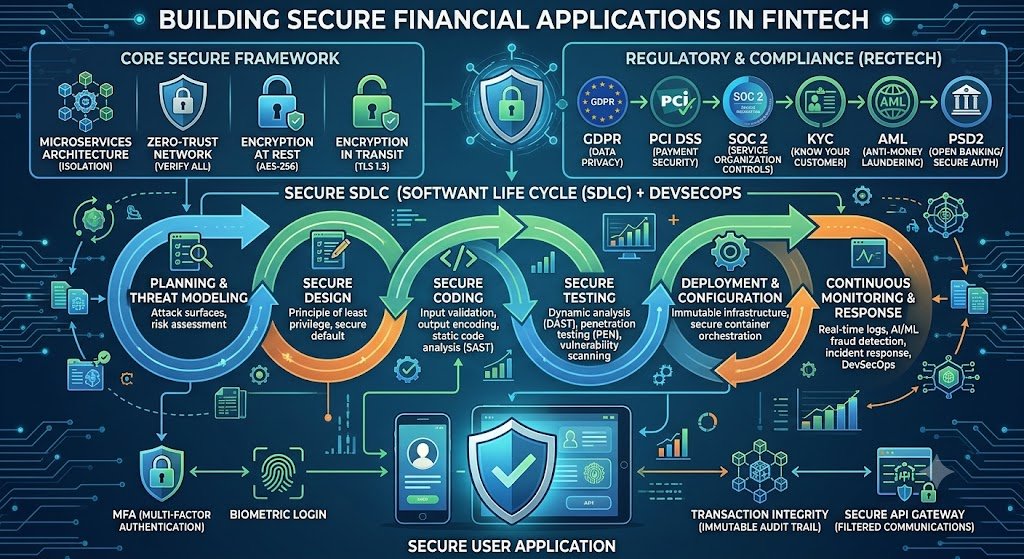
1. Encryption at rest and in transit. All medical data must be encrypted. TLS for transit, AES-256 for rest.
2. Access control. Role-based access: a receptionist sees appointments, a doctor sees clinical records, a lab technician sees lab orders. No role should see more than necessary.
3. Audit logging. Every access to a medical record must be logged: who accessed, when, what, and why. This is required for DPDPA accountability and for detecting inappropriate access.
4. Data minimisation. Collect only what is clinically necessary. A scheduling system does not need the patient's full medical history.
5. Secure integrations. Integrations with labs, pharmacies, and insurance must use secure APIs with authentication.
6. Backup and disaster recovery. Medical data must be backed up and recoverable. Downtime in a hospital can be life-threatening.
ABDM Integration
ABDM provides national digital health infrastructure. Integrating with ABDM enables:
ABHA number: a unique health ID for every patient.
Health records linking: patients can link their records across providers.
Consent-based sharing: patients control access to their records.
Integration requirements: ABDM has specific technical specifications (Health Information Exchange, Consent Manager, Health Information Provider/User). Integration requires registration and compliance with ABDM standards.
DPDPA Healthcare Compliance
Under the DPDP Act, health data is sensitive personal data. Key obligations:
Consent: must be free, specific, informed, and unambiguous. Bundled consent is not valid.
Purpose limitation: data collected for treatment should not be used for research or marketing without separate consent.
Data minimisation: collect only what is needed.
Retention: medical records have statutory retention requirements (often 3–5 years), but other data should be purged.
Breach notification: to CERT-In within six hours and to affected individuals.
Significant Data Fiduciary: large healthcare providers may be SDFs with additional obligations (DPO, audits, DPIA).
Security Checklist
| Requirement | Implementation | Priority |
|---|---|---|
| Encryption at rest | AES-256 for databases and backups | High |
| Encryption in transit | TLS 1.2+ for all APIs | High |
| Role-based access | RBAC for all medical data | High |
| Audit logging | All record access logged | High |
| Unique patient identity | No phone-only access | High |
| ABDM integration | ABHA, consent, HIE | Medium |
| DPDPA consent | Granular, purpose-specific | High |
| Breach notification | Incident response plan | High |
| Backup and DR | Regular backups, tested recovery | High |
Real Costs in India (2026)
Healthcare software costs depend on the scope: a clinic management system, a hospital information system, or a full patient portal with ABDM integration.
Build Costs by Scope
| Scope | Build Cost (₹) | Build Cost ($ approx.) | Timeline | What It Covers |
|---|---|---|---|---|
| Clinic management system | ₹5–15 lakh | $6,000–$18,000 | 10–16 weeks | Appointments, billing, basic records, pharmacy |
| Patient portal + scheduling | ₹12–30 lakh | $14,400–$36,000 | 16–24 weeks | Portal, scheduling, reports, payments |
| Hospital information system (HIS) | ₹40–90 lakh | $48,000–$1,08,000 | 24–36 weeks | HIS, EHR, scheduling, billing, pharmacy, labs |
| Telemedicine platform | ₹20–50 lakh | $24,000–$60,000 | 18–28 weeks | Video consultation, scheduling, prescriptions, payments |
| Full healthcare platform (ABDM + AI) | ₹80 lakh–₹2 crore | $96,000–$2,40,000 | 36–52 weeks | Full HIS + portal + ABDM + AI features |
Note: USD conversions at ₹83/$. These ranges include design, development, and basic security testing. They exclude third-party integrations (labs, insurance), ABDM certification, and clinical validation.
Integration and Compliance Costs
| Item | Cost (₹) | Cost ($ approx.) | Notes |
|---|---|---|---|
| ABDM integration | ₹3–10 lakh | $3,600–$12,000 | Registration, HIE, consent manager |
| HL7/FHIR integration | ₹5–15 lakh | $6,000–$18,000 | With labs, radiology, pharmacy |
| Security audit | ₹1.5–5 lakh | $1,800–$6,000 | Independent review |
| Penetration testing | ₹1–3 lakh | $1,200–$3,600 | Pre-launch and annual |
| NABH compliance support | ₹2–8 lakh | $2,400–$9,600 | Documentation, process |
Running Costs
| Cost Component | Monthly Range (₹) | Monthly Range ($ approx.) | Notes |
|---|---|---|---|
| Hosting and infrastructure | ₹20,000–₹1,50,000 | $240–$1,800 | Indian data centres |
| SMS/WhatsApp reminders | ₹10,000–₹60,000 | $120–$720 | Per-message pricing |
| Video consultation infra | ₹10,000–₹50,000 | $120–$600 | Per-concurrent-user pricing |
| Security monitoring | ₹15,000–₹60,000 | $180–$720 | SIEM, monitoring |
| Maintenance | ₹30,000–₹1,50,000 | $360–$1,800 | 15–25% of build annually |
The Hidden Costs
Clinical validation. Software that affects clinical decisions must be validated by clinicians. This is time-consuming and essential.
Change management. Healthcare staff are busy and resistant to new systems. Training and support are significant costs.
Interoperability. Integrating with labs, pharmacies, and insurance requires agreements and technical work.
ABDM certification. ABDM integration requires compliance with technical specifications and may require certification.
India-Specific Compliance: ABDM, DPDPA, NABH and Clinical Establishments
ABDM (Ayushman Bharat Digital Mission)
ABDM is India's national digital health infrastructure. Key components:
ABHA (Health ID): a unique health account for every individual.
Health Information Exchange (HIE): consent-based sharing of health records.
Health Information Provider (HIP): systems that provide health data.
Health Information User (HIU): systems that consume health data.
Consent Manager: manages patient consent.
For healthcare software, ABDM integration means:
Supporting ABHA-based login.
Registering as HIP/HIU.
Implementing consent artefacts.
Complying with ABDM technical specifications.
DPDPA
Health data is sensitive personal data. The DPDP Act imposes:
Consent: specific, informed, unambiguous.
Purpose limitation: treatment data not used for other purposes without consent.
Data minimisation.
Retention: statutory retention for medical records, purge for other data.
Breach notification: CERT-In within six hours.
SDF obligations: for large providers.
NABH Accreditation
NABH (National Accreditation Board for Hospitals & Healthcare Providers) requires documented processes, patient rights, and quality indicators. Healthcare software should support:
Patient rights documentation.
Quality indicator tracking.
Incident reporting.
Medical record standards.
Clinical Establishments Act
State-level clinical establishment regulations require registration and compliance. Software should support documentation and reporting.
Compliance Checklist
| Requirement | Implementation | Priority |
|---|---|---|
| ABHA integration | ABHA login and linking | High |
| ABDM HIE | HIP/HIU registration | Medium |
| Consent management | ABDM consent artefacts | High |
| DPDPA consent | Granular, purpose-specific | High |
| Unique patient ID | No phone-only access | High |
| Audit logging | All record access logged | High |
| NABH indicators | Quality tracking | Medium |
| Breach notification | Incident response plan | High |
Implementation Framework: A Phased Approach With Cost Gates
Phase 1: Requirements and Compliance Scoping (Week 1–3)
Objective: Understand the clinical, operational, and regulatory requirements.
Activities:
Map current patient journeys: registration, appointment, consultation, diagnostics, pharmacy, billing.
Identify pain points: wait times, no-shows, record access, billing delays.
Assess compliance requirements: DPDPA, ABDM, NABH, clinical establishments.
Design the architecture: patient portal, scheduling, EHR integration.
Decide build vs buy for commodity components.
Cost: ₹1–3 lakh ($1,200–$3,600) for scoping.
Go/No-Go: Requirements understood. Compliance scoped. Architecture approved.
Phase 2: Patient Portal and Scheduling (Week 4–14)
Objective: Build the patient portal and scheduling system.
Activities:
Secure authentication: unique patient ID + OTP/MFA.
Appointment booking: real-time availability, multi-resource scheduling.
Reminders: SMS and WhatsApp.
Reports access: lab, radiology, prescriptions.
Payments: online bill payment.
Cost: ₹12–30 lakh ($14,400–$36,000).
Go/No-Go: Portal works securely. No identity ambiguity. Scheduling reduces no-shows.
Phase 3: EHR and Integration (Week 15–24)
Objective: Build or integrate the EHR and connect to labs, pharmacy, and billing.
Activities:
EHR: patient records, clinical notes, prescriptions.
HL7/FHIR integration with labs and radiology.
Pharmacy integration.
Billing and insurance integration.
Cost: ₹20–40 lakh ($24,000–$48,000) depending on scope.
Go/No-Go: Clinical workflow works end-to-end. Integrations are reliable.
Phase 4: ABDM and Security (Week 25–32)
Objective: Integrate ABDM and complete security testing.
Activities:
ABHA integration.
ABDM HIE and consent manager integration.
Security audit and penetration testing.
DPDPA compliance review.
Audit logging implementation.
Cost: ₹10–25 lakh ($12,000–$30,000).
Go/No-Go: ABDM integration works. Security tests pass. Compliance review passes.
Phase 5: Pilot and Scale (Month 9–12)
Objective: Pilot with limited patients and scale.
Activities:
Pilot with one department or clinic.
Measure adoption, no-show reduction, patient satisfaction.
Fix issues.
Scale to full organisation.
Cost: Running costs plus governance.
Go/No-Go: Pilot meets clinical, security, and adoption criteria.
Phase Summary Table
| Phase | Duration | Key Deliverable | Cost (₹) | Go/No-Go Criteria |
|---|---|---|---|---|
| 1. Requirements | 3 weeks | Scoping, architecture | 1–3 lakh | Requirements clear |
| 2. Portal & Scheduling | 10 weeks | Secure portal, scheduling | 12–30 lakh | Portal secure, no-shows reduced |
| 3. EHR & Integration | 10 weeks | EHR, lab/pharmacy integration | 20–40 lakh | Clinical workflow works |
| 4. ABDM & Security | 8 weeks | ABDM, security testing | 10–25 lakh | Tests pass, compliance |
| 5. Pilot & Scale | 6 months | Pilot results, scaling | Running costs | Pilot meets criteria |
Risks, Pitfalls, and Governance
The Most Common Healthcare Software Failures
Identity ambiguity. Using phone number as the sole identity key exposes records. Mitigation: Unique patient ID, no phone-only access.
Inadequate access control. Staff seeing records they should not. Mitigation: RBAC, audit logging, access reviews.
Poor interoperability. Systems that cannot exchange data with labs, pharmacy, or other providers. Mitigation: HL7/FHIR standards, integration testing.
Clinical workflow disruption. Software that slows clinicians down gets bypassed. Mitigation: Involve clinicians in design, pilot, iterate.
Data breach. A breach of medical data is catastrophic. Mitigation: Encryption, pen testing, monitoring, incident response.
Compliance gaps. Missing DPDPA, ABDM, or NABH requirements. Mitigation: Compliance scoping in phase one, review before launch.
Risk Summary Table
| Risk | Likelihood | Impact | Mitigation |
|---|---|---|---|
| Identity ambiguity | High | Critical | Unique patient ID |
| Access control failure | Medium | Critical | RBAC, audit logs |
| Poor interoperability | High | High | HL7/FHIR standards |
| Clinical disruption | High | High | Clinician involvement, pilot |
| Data breach | Medium | Critical | Encryption, pen testing |
| Compliance gaps | Medium | High | Scoping, review |
Benchmark Summary and Decision Framework
Decision Matrix: Build vs Buy
| Factor | Build Custom | Buy HIS/EMR Product |
|---|---|---|
| Unique workflow | Complex, specialty-specific | Standard clinical workflow |
| Integration needs | Custom, multi-system | Standard integrations |
| Cost | Higher upfront | Subscription |
| Time to market | Months | Weeks |
| Control | Full | Limited |
| Best for | Large hospitals, specialty chains | Clinics, small hospitals |
Feature Priority Table
| Feature | Value | Effort | Priority |
|---|---|---|---|
| Secure patient identity | Very High | Medium | 1 |
| Appointment scheduling | High | Medium | 2 |
| Reminders (no-show reduction) | High | Low | 3 |
| Reports access | High | Medium | 4 |
| Access control and audit | Very High | Medium | 1 (enabler) |
| ABDM integration | Medium-High | High | 5 |
| EHR | High | Very High | 6 |
The One-Paragraph Decision Rule
If you are building healthcare software, start with secure patient identity and access control—not the portal features. Use a unique patient identifier, never phone-only access. Build scheduling and reminders early because they deliver immediate operational value. Integrate ABDM and EHR after the foundation is secure. Involve clinicians in design. Test security before launch, not after. And treat medical data security as the product, not a feature.
Frequently Asked Questions
1. How much does healthcare software development cost in India?
A clinic management system costs ₹5–15 lakh ($6,000–$18,000). A patient portal + scheduling costs ₹12–30 lakh ($14,400–$36,000). A hospital information system costs ₹40–90 lakh ($48,000–$1,08,000). A full platform with ABDM and AI costs ₹80 lakh–₹2 crore ($96,000–$2,40,000).
2. What is ABDM and do I need to integrate with it?
ABDM (Ayushman Bharat Digital Mission) is India's national digital health infrastructure. It provides ABHA health IDs, consent-based record sharing, and interoperability. Integration is increasingly expected and enables patients to link records across providers.
3. How does DPDPA affect healthcare software?
Health data is sensitive personal data. Consent must be specific and informed, purpose limitation applies, data minimisation is required, and breach notification to CERT-In within six hours is mandatory. Large providers may be Significant Data Fiduciaries.
4. How do I prevent medical data breaches?
Unique patient identity (not phone-only), role-based access control, audit logging, encryption at rest and in transit, penetration testing, and incident response planning.
5. What is the most common patient portal security mistake?
Using phone number as the sole identity key. In Indian families, phone numbers are often shared. Use a unique patient ID plus authentication.
6. How do I reduce appointment no-shows?
SMS and WhatsApp reminders 24–48 hours before, confirmation requirements, deposits for high-value appointments, and careful overbooking based on historical data.
7. Do I need HL7/FHIR integration?
If you need to exchange data with labs, radiology, pharmacy, or other providers, yes. HL7 and FHIR are the standards for healthcare interoperability.
8. What is NABH and does software need to support it?
NABH is the National Accreditation Board for Hospitals & Healthcare Providers. Software should support documentation, quality indicators, and patient rights tracking for NABH compliance.
9. How long does healthcare software development take?
A clinic system takes 10–16 weeks. A patient portal + scheduling takes 16–24 weeks. A hospital information system takes 24–36 weeks. A full platform takes 36–52 weeks.
10. What are the biggest risks in healthcare software?
Identity ambiguity, access control failures, poor interoperability, clinical disruption, data breaches, and compliance gaps. All require dedicated attention from the architecture phase.
11. Should I build or buy an EMR/HIS?
Build if you have unique specialty workflows or complex integration needs. Buy if you are a clinic or small hospital with standard workflows. Many large hospitals build custom on top of a standard EMR.
12. How can Innovative AI Solutions help?
Innovative AI Solutions builds secure healthcare software for Indian hospitals, clinics, labs, and telemedicine platforms—patient portals, appointment scheduling, EHR, ABDM integration, and DPDPA-compliant data security. Our Delhi-based team handles architecture, development, and compliance. Visit https://innovativeais.com to discuss your requirements.
Contact Innovative AI Solutions
Ready to build a patient portal that protects medical data and reduces no-shows?
[One-line supporting sentence.]
Contact Information
Innovative AI Solutions
📍 Netaji Subhash Place, Pitampura, Delhi – 110034
🌐 Website: https://innovativeaislabs.com 📧 Email: info@innovativeais.com
📞 Phone: +91 7464 099 059 / +91 96899 67356
Business Services
AI Automation
AI Development
AI Consulting
Machine Learning Solutions
Deep Learning Solutions
Generative AI Services
NLP Solutions
AI Agents
AI Chatbots
Voice AI
CRM Development
Custom Software Development
Website Development
Mobile App Development
About the Author
Abhishek Kumar
Founder & CEO, Innovative AI Solutions
5+ years building production AI systems for Indian businesses. Based in Delhi, serving clients across India.
Ready to build AI solutions for your business?
Innovative AI Solutions — Delhi's leading AI development company. Free consultation available.
Get Free Consultation →
A practical 2026 guide for Indian healthcare providers building patient portals, scheduling and secure systems—unique patient identity, ABDM and DPDPA compliance, real rupee costs, and a phased rollout that puts data security before features.
#HealthcareSoftware #PatientPortal #AppointmentScheduling #MedicalDataSecurity #ABDM #ABHA #DPDPA #NABH #EHR #EMR #Telemedicine #HealthcareAI #MeitY #DigitalHealth #DelhiNCR #InnovativeAISolutions
Copyright ©️ 2015–2026 Innovative AI Solutions. All Rights Reserved. | Privacy Policy | Terms & Conditions