




AI Automation
We build AI-native systems and agentic workflows that turn your data into automated, intelligent decisions.
Explore serviceAI & Automation
AI Automation RAG Development AI Agents Generative AI Machine Learning AI ConsultingSoftware & Cloud
Software Development SaaS Development Mobile Apps Cloud & IT Services Website Design Digital MarketingPopular
Hire AI Developers AI Cost EstimatorThe basics
Custom software development is the process of designing, building, testing, and maintaining software that is built specifically around your business processes — instead of forcing your business to adapt to a generic, off-the-shelf product.
Most businesses eventually reach a point where spreadsheets, generic SaaS tools, and disconnected systems stop being enough. Data lives in three different places, teams repeat manual work every day, and the "tool" your business runs on doesn't actually match how your business runs. That is usually the point where custom software starts paying for itself — not as a nice-to-have, but as the thing that removes the daily friction.
A well-engineered software project typically moves through several stages:
Custom software becomes valuable when your business has workflows, data relationships, or customer experiences that generic tools cannot properly support. It is particularly worth considering when you are duplicating data entry across multiple tools, when your growth is limited by a platform you don't control, when compliance or security requirements exceed what an off-the-shelf product can guarantee, or when your competitive advantage depends on a workflow that no vendor sells because it's specific to how you operate.
The alternative — stitching together five different SaaS subscriptions with spreadsheets and manual exports in between — often ends up costing more in wasted staff time than a properly built system would have cost to develop in the first place.
What we build
Our software development capabilities cover the full lifecycle — from discovery and architecture to development, testing, deployment, and long-term support.
We build custom web applications tailored to your exact business processes — from internal dashboards and customer portals to full-scale platforms serving thousands of users. Every application is designed around real workflows instead of forcing your team into a generic template.
We design and build multi-tenant SaaS platforms from the ground up — covering user authentication, subscription billing, role-based access control, and scalable architecture that supports growth from your first customer to your ten-thousandth.
We build secure, well-documented REST and GraphQL APIs that connect your applications, and integrate with third-party services such as payment gateways, CRMs, ERPs, shipping providers, and communication platforms.
We develop enterprise-grade software with the security, auditability, and integration requirements large organizations need — connecting with existing ERP, CRM, and legacy systems rather than requiring a full replacement.
For startups, speed and validation matter more than perfection. We help founders build lean, functional MVPs that test the core business hypothesis quickly, with an architecture that can scale once product-market fit is confirmed.
We modernize outdated software by re-architecting monolithic systems into maintainable, scalable applications — migrating data safely, preserving business logic, and minimizing disruption to daily operations.
We design normalized, performant database schemas and optimize queries for applications handling large data volumes — using PostgreSQL, MySQL, MongoDB, and Redis depending on your data structure and access patterns.
Software needs ongoing care after launch. We provide bug fixes, security patches, performance monitoring, and feature updates so your product keeps running reliably as your business grows.
We build fast, accessible, and maintainable user interfaces using modern frontend frameworks — with attention to component reusability, state management, and performance on both desktop and mobile browsers.
We build the server-side logic, business rules, and data processing that power your application — designed for correctness, performance under load, and clean separation of concerns so the codebase stays maintainable as it grows.
We build applications designed from the start to run on cloud infrastructure — using containerization, managed databases, and auto-scaling so the system can grow with demand without a re-architecture down the line.
We integrate payment gateways, shipping providers, accounting software, communication platforms, and other third-party services your business already depends on — so your new software works with your existing operations, not around them.
We run functional, regression, performance, and security testing throughout development — not just before launch — so defects get caught early when they're cheap to fix instead of after they reach production.
If you already have a codebase, we can audit its architecture, security, and performance — identifying risks and technical debt before they turn into outages or expensive rewrites.
Who we build for
Custom storefronts, inventory systems, and order management platforms built for scale.
Patient management systems and administrative software built with data privacy in mind.
Secure platforms for transactions, reporting, and compliance workflows.
Property management, listing, and CRM platforms for agents and investors.
Fleet tracking, dispatch, and supply chain management systems.
Learning management systems and student administration platforms.
Production tracking, inventory, and quality management software.
Client management, billing, and project tracking platforms.
Route optimization, warehouse management, and vendor coordination systems.
Booking engines, guest management, and reservation platforms.
Citizen service portals and internal administrative systems.
Content management and subscription-based media platforms.
Under the hood
A reliable software product needs more than working code — it needs an architecture that survives growth.
The frontend interface users interact with — web, mobile, or both.
Business logic, rules, and workflow orchestration.
Databases, caching, and data access patterns.
APIs and connections to third-party services and internal systems.
Cloud hosting, deployment pipelines, and monitoring.
We design each layer to be independently testable and replaceable — so a change to your payment provider doesn't require touching your business logic, and a frontend redesign doesn't require rebuilding your backend.
Built for where you are
Lean MVPs built to validate your idea fast, with an architecture that won't need a full rebuild once you find product-market fit.
Practical internal tools and customer-facing platforms sized to your budget, without unnecessary enterprise overhead.
Systems built with the governance, security, and integration requirements large organizations require, connecting with existing infrastructure rather than replacing it.
How we work
We study your business processes, users, and goals to define exactly what needs to be built.
We design the system architecture, database schema, and technical roadmap before writing code.
We design interfaces that are intuitive for your actual users, not just visually polished.
Our engineers build the backend, frontend, and integrations in iterative, reviewable sprints.
We test functionality, performance, and security before anything reaches production.
We deploy to production infrastructure with monitoring and rollback plans in place.
We continue supporting, maintaining, and scaling the software as your business grows.
Is it time?
It's not always obvious when to move from off-the-shelf tools to custom software. A few common signs it's time:
Build vs buy
Faster to start and lower upfront cost — a good fit for simple, standard workflows with no unique requirements.
The right choice when your workflows, data relationships, integrations, or scale requirements go beyond what a generic product can support — and when you need full ownership of your data and roadmap.
Tech stack
Technology selection depends on your requirements rather than a fixed stack.
After launch
Launch is the beginning of a software product's life, not the end. After going live, we continue monitoring performance, fixing issues, and working with you on the next round of features as your business and user base grow. Support plans can range from basic security patching to a dedicated ongoing development team, depending on how actively your product needs to evolve.
In practice
Why it's worth it
Focused development sprints get your product live sooner.
Systems designed to handle growth without a rebuild.
Clean, documented code that's easy to maintain and extend.
Software that connects with your existing tools and data.
Authentication, access control, and data protection built in.
Continued maintenance so your software stays reliable.
Automating manual work frees your team for higher-value tasks.
You own the code and data — no vendor lock-in.
Investment
Software development cost varies widely based on scope. A simple internal tool with a handful of screens costs significantly less than a multi-tenant SaaS platform with billing, permissions, and third-party integrations.
Factors that affect cost include:
Rather than quoting a fixed number without context, we recommend a discovery conversation first — so the estimate reflects your actual requirements rather than industry averages.
What can go wrong
Software projects fail less often because of bad code and more often because of unclear scope, poor communication, or architecture decisions made too early or too late. We address these risks directly:
We define clear requirements upfront and manage changes through structured sprints, not open-ended requests.
We invest in architecture planning before writing code to avoid expensive rewrites later.
We test third-party integrations early rather than assuming they'll "just work" at launch.
We write documented, testable code so future changes don't require reverse-engineering old decisions.
Why us
We combine software engineering with AI, cloud infrastructure, and digital marketing under one team — meaning your software project doesn't end at a handoff between disconnected vendors. The same team that builds your platform can also help you host it, secure it, and market it.
Our approach favors practical, maintainable engineering over trend-chasing — we choose technology based on your specific requirements, not what's fashionable this year.
Questions
Custom software development is the process of designing and building software specifically for your business requirements, rather than using a generic off-the-shelf product.
Timelines depend on scope and complexity. A simple MVP may take a few weeks, while a full enterprise platform can take several months.
Yes. We build APIs and integrations that connect new software with your existing CRM, ERP, or internal tools.
Yes. We help startups build lean, functional MVPs designed to validate the business model quickly and scale later.
We select technology based on project requirements — commonly Python, Node.js, React, PostgreSQL, and AWS — rather than forcing every project into one stack.
Cost depends on scope, number of features, integrations, and timeline. We recommend defining requirements first so we can provide an accurate estimate.
Yes. We offer ongoing maintenance, monitoring, and feature development after your software goes live.
Yes. We re-architect and migrate legacy systems into modern, maintainable applications while preserving your existing business logic and data.
Yes. We follow secure development practices including access controls, encryption, and secure secrets management throughout the project.
Yes. We're happy to sign a non-disclosure agreement before any detailed discussion of your business or technical requirements.
You do. We build under work-for-hire terms so you retain full ownership of the source code, data, and intellectual property.
Yes. We can integrate with your existing team, providing additional capacity or specialized expertise where needed.
We offer both, depending on project scope. Well-defined projects often work well as fixed-price, while evolving products benefit from flexible time-based engagement.
We provide ongoing feature development and support contracts so your software can continue evolving after the initial launch.
Yes. We offer mobile app development as well, and can build a shared backend that serves both your web and mobile applications.
Some change is normal. We manage changes through structured sprint planning so new requirements are scoped and estimated rather than silently expanding the project.
Yes. We provide technical documentation covering architecture, APIs, and setup instructions so your team (or a future developer) can work with the codebase confidently.
Yes. We can deploy and manage your application on AWS or another cloud provider, or hand off deployment to your internal team if preferred.
We provide regular sprint updates, demos, and direct access to the development team rather than routing everything through account managers.
Yes. We can build internationalization and localization support for applications serving customers across multiple regions.
A website is primarily informational, while a web application involves interactive functionality — user accounts, data processing, and dynamic features specific to your business logic.
Across every team
Internal tools that eliminate manual data entry and reporting.
Custom CRM features and quote/proposal generation tools.
Billing, invoicing, and financial reporting systems.
Employee onboarding and internal administration platforms.
Ticketing and knowledge base systems tailored to your product.
Feature flagging, analytics, and usage tracking infrastructure.
Measuring success
The value of custom software should be measurable, not just assumed. Common ways businesses measure ROI include hours of manual work eliminated per week, reduction in data entry errors, faster customer response times, increased conversion rates from a better user experience, and revenue enabled by features a generic tool couldn't support.
For example, if your team spends 15 hours a week manually reconciling data between two systems, a properly integrated platform can eliminate that entirely — a saving that compounds every month the software is in use.
Next steps
The first step isn't choosing a technology stack — it's getting clear on the problem you're solving. We start every engagement with a discovery conversation covering your current workflows, pain points, and goals. From there, we define scope, provide an estimate, and outline a development roadmap before any code is written.
Beyond traditional software
Modern software doesn't have to be limited to rule-based logic. Where it makes sense, we integrate AI capabilities directly into the platforms we build — intelligent search, automated data extraction, natural-language interfaces, and predictive features powered by our AI automation practice. This means your software can be built AI-native from day one, instead of retrofitted later.
Built to last
Security isn't an afterthought we add before launch — it's part of how we design the system from the start. This includes secure authentication and password handling, role-based access control, encrypted data storage and transmission, protection against common vulnerabilities like SQL injection and cross-site scripting, regular dependency updates, and secure secrets management for API keys and credentials.
Reliability comes from automated testing, staged deployments, monitoring and alerting, and having a rollback plan for every release — so issues get caught and reversed quickly rather than sitting undetected in production.
Looking ahead
Software development is increasingly shaped by AI-assisted coding, cloud-native architectures, and API-first design that makes systems easier to connect and extend. Businesses that build with modular, well-documented architecture today will find it far easier to integrate AI features, new integrations, and scale in the years ahead — while monolithic, undocumented systems become progressively more expensive to change.
That's why we build every project with maintainability and extensibility in mind, not just the features needed for launch day.
Let's discuss your project requirements and turn your idea into a working product.
Discuss Your Software ProjectWhat we build
Six practices, one team — so your AI, product, infrastructure, and growth never fall out of sync.
We build AI-native systems and agentic workflows that turn your data into automated, intelligent decisions.
Explore service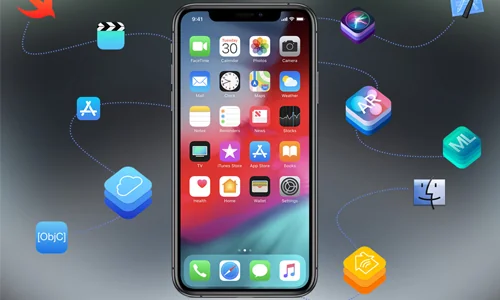
We craft native and cross-platform mobile experiences that keep your customers engaged, on any device.
Explore service
We design secure, observable cloud infrastructure and DevOps pipelines that scale with your business.
Explore service
We create custom, responsive websites that turn visitors into customers, from portfolios to e-commerce.
Explore service
We drive measurable growth through SEO, paid media, and data-backed marketing campaigns.
Explore serviceGlobal delivery
We build and maintain software remotely for teams across three primary English-speaking markets, with timezone-aware delivery and documented collaboration. Need to add capacity? You can also hire AI and software developers directly.
Regional pages: software and AI development for US businesses · software and AI development for UK businesses · software and AI development for Australian businesses.