The AI Security Paradox
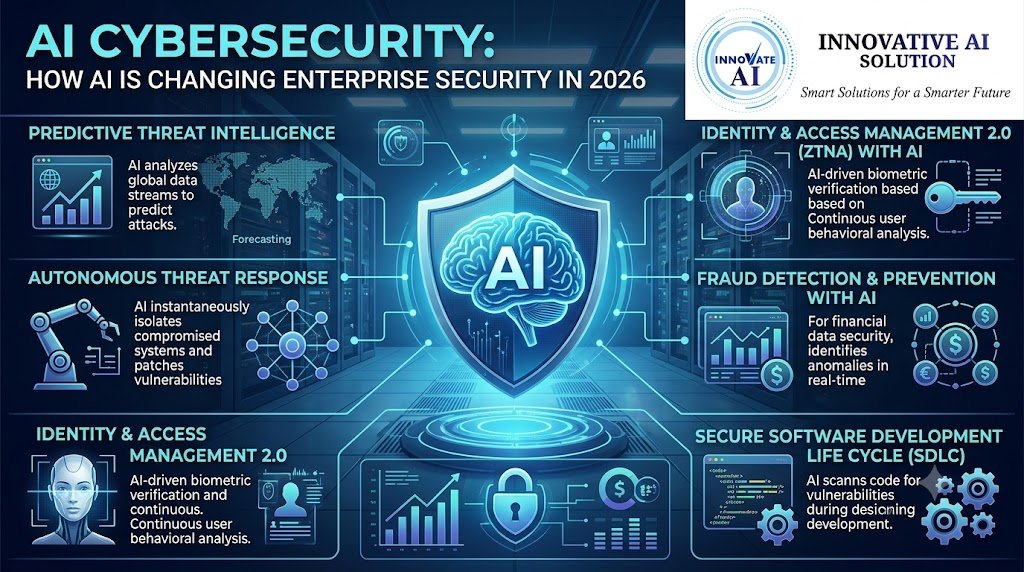
AI is transforming cybersecurity in two directions at once. It is the most powerful defensive tool enterprises have ever had. It is also the most dangerous new attack vector.
On the defensive side, AI detects threats faster, correlates signals across systems, automates responses, and identifies anomalies humans would miss. Security operations centres that once relied on manual analysis now use AI to triage alerts, investigate incidents, and respond in real time.
On the offensive side, AI enables attacks that were previously impossible. AI-generated phishing that is indistinguishable from legitimate communication. AI-powered malware that adapts to defences. Deepfakes that defeat identity verification. Automated vulnerability discovery that finds flaws faster than defenders can patch them.
Indian enterprises face both sides of this paradox. They are adopting AI for security while also facing AI-powered attacks. The enterprises that succeed are those that understand both dimensions and build defences accordingly.
This guide covers how AI is changing enterprise cybersecurity in 2026. It addresses defensive applications, AI-powered attacks, and what Indian enterprises must do.
For organisations building secure AI systems, Innovative AI Solutions provides AI consulting and AI development services.
AI in Defensive Security
Application 1: Threat Detection
AI detects threats by identifying patterns and anomalies that rule-based systems miss.
| Capability | What It Does |
|---|---|
| Anomaly detection | Identifies unusual behaviour |
| Pattern recognition | Recognises attack signatures |
| Behavioural analysis | Detects compromised accounts |
| Network analysis | Identifies malicious traffic |
Impact: 30–50% faster threat detection.
Application 2: Alert Triage
AI reduces alert fatigue by prioritising and filtering alerts.
| Capability | What It Does |
|---|---|
| Alert correlation | Groups related alerts |
| False positive reduction | Filters noise |
| Prioritisation | Ranks by severity |
| Context enrichment | Adds relevant data |
Impact: 60–80% reduction in alert volume requiring human review.
Application 3: Automated Response
AI automates responses to common threats.
| Capability | What It Does |
|---|---|
| Automated containment | Isolates affected systems |
| Automated remediation | Applies fixes |
| Automated blocking | Blocks malicious traffic |
| Automated notification | Alerts stakeholders |
Impact: 50–70% faster incident response.
Application 4: Threat Intelligence
AI processes and correlates threat intelligence from multiple sources.
| Capability | What It Does |
|---|---|
| Intelligence aggregation | Collects from sources |
| Correlation | Links related threats |
| Attribution | Identifies threat actors |
| Prediction | Anticipates attacks |
Impact: Better situational awareness, proactive defence.
Application 5: Vulnerability Management
AI identifies and prioritises vulnerabilities.
| Capability | What It Does |
|---|---|
| Vulnerability discovery | Finds weaknesses |
| Risk scoring | Prioritises by risk |
| Patch management | Recommends patches |
| Exploit prediction | Predicts exploitation |
Impact: 40–60% faster vulnerability remediation.
Application 6: User Behaviour Analytics
AI detects compromised accounts and insider threats.
| Capability | What It Does |
|---|---|
| Behaviour baselining | Establishes normal patterns |
| Anomaly detection | Identifies deviations |
| Risk scoring | Assesses user risk |
| Insider threat detection | Identifies malicious insiders |
Impact: 50–70% improvement in detecting compromised accounts.
AI-Powered Attacks
Attack 1: AI-Generated Phishing
AI generates phishing emails that are grammatically correct, contextually relevant, and personalised.
| Traditional Phishing | AI-Generated Phishing |
|---|---|
| Generic templates | Personalised content |
| Obvious errors | Flawless grammar |
| Easy to spot | Hard to distinguish |
| Mass distribution | Targeted |
Defence: AI-powered email security, user training, multi-factor authentication.
Attack 2: Deepfakes
AI-generated audio and video impersonate executives, employees, or customers.
| Deepfake Type | Attack Scenario |
|---|---|
| Voice deepfake | Impersonate CEO for wire transfer |
| Video deepfake | Fake video call for verification |
| Image deepfake | Fake identity documents |
Defence: Verification protocols, out-of-band confirmation, deepfake detection.
Attack 3: AI-Powered Malware
Malware that adapts to defences and evades detection.
| Capability | Impact |
|---|---|
| Polymorphic | Changes to evade signatures |
| Adaptive | Learns from defences |
| Autonomous | Operates without commands |
Defence: Behavioural detection, AI-powered endpoint security.
Attack 4: Automated Vulnerability Discovery
AI finds vulnerabilities faster than defenders can patch.
| Capability | Impact |
|---|---|
| Fuzzing | Automated input testing |
| Code analysis | Finds flaws in code |
| Exploit generation | Creates working exploits |
Defence: Faster patching, AI-powered code review, bug bounty programs.
Attack 5: Credential Stuffing at Scale
AI automates credential attacks across services.
| Capability | Impact |
|---|---|
| Credential testing | Tests leaked credentials |
| CAPTCHA solving | Bypasses bot protection |
| Rate limit evasion | Distributes attacks |
Defence: MFA, rate limiting, credential monitoring.
Attack 6: Social Engineering at Scale
AI automates social engineering across channels.
| Capability | Impact |
|---|---|
| Conversation automation | Engages targets at scale |
| Persona creation | Creates fake identities |
| Multi-channel | Email, chat, voice |
Defence: Verification protocols, training, AI-powered detection.
What Enterprises Must Do
Defence 1: Deploy AI-Powered Security
| Tool Category | Purpose |
|---|---|
| SIEM with AI | Threat detection and correlation |
| EDR with AI | Endpoint detection and response |
| NDR with AI | Network detection and response |
| Email security with AI | Phishing detection |
| UEBA | User behaviour analytics |
Defence 2: Defend AI Systems
AI systems themselves need protection.
| Risk | Defence |
|---|---|
| Prompt injection | Input validation, guardrails |
| Data leakage | Access control, output filtering |
| Model theft | Rate limiting, monitoring |
| Adversarial inputs | Robustness testing |
Defence 3: Build AI Governance
| Governance Element | Purpose |
|---|---|
| AI security policy | Define acceptable use |
| Risk assessment | Identify AI-specific risks |
| Controls | Implement safeguards |
| Monitoring | Detect AI-related incidents |
| Audit | Verify compliance |
Defence 4: Train People
AI-powered attacks target people, not just systems.
| Training Area | Purpose |
|---|---|
| Phishing awareness | Recognise AI-generated phishing |
| Deepfake awareness | Verify identity |
| Verification protocols | Out-of-band confirmation |
| Incident reporting | Report suspected attacks |
Defence 5: Prepare for AI Incidents
| Preparation | Purpose |
|---|---|
| Incident response plan | Include AI scenarios |
| Deepfake verification | Protocol for high-stakes requests |
| AI forensics | Investigate AI-related incidents |
| Recovery | Restore from AI-enabled attacks |
What AI Cybersecurity Costs in India
AI Security Tool Costs
| Tool Category | Monthly Range (INR) | Monthly Range (USD) |
|---|---|---|
| AI-powered SIEM | ₹50,000–₹3,00,000 | $600–$3,600 |
| AI-powered EDR | ₹20,000–₹1,00,000 | $240–$1,200 |
| AI-powered NDR | ₹30,000–₹1,50,000 | $360–$1,800 |
| AI email security | ₹10,000–₹50,000 | $120–$600 |
| UEBA | ₹20,000–₹80,000 | $240–$960 |
Implementation Costs
| Scope | Cost Range (INR) | Cost Range (USD) | Timeline |
|---|---|---|---|
| Basic AI security (single tool) | ₹2,00,000–₹6,00,000 | $2,400–$7,200 | 4–8 weeks |
| Integrated AI security | ₹6,00,000–₹20,00,000 | $7,200–$24,000 | 8–16 weeks |
| AI security operations | ₹20,00,000–₹60,00,000 | $24,000–$72,000 | 16–32 weeks |
| Enterprise AI security programme | ₹60,00,000–₹1,50,00,000+ | $72,000–$180,000+ | 32–52 weeks |
Ongoing Costs
| Cost Category | Monthly Range (INR) | Monthly Range (USD) |
|---|---|---|
| AI security tools | ₹1,00,000–₹5,00,000 | $1,200–$6,000 |
| Security operations | ₹50,000–₹2,00,000 | $600–$2,400 |
| Threat intelligence | ₹20,000–₹1,00,000 | $240–$1,200 |
| Training | ₹10,000–₹50,000 | $120–$600 |
The Cost of Not Being Prepared
| Risk | Potential Cost |
|---|---|
| Data breach | ₹5,00,00,000+ |
| Ransomware | ₹1,00,00,000+ |
| Deepfake fraud | ₹50,00,000+ |
| Regulatory penalties | DPDPA, sector fines |
| Reputation damage | Long-term revenue impact |
India-Specific Considerations
Indian Enterprise Context
| Factor | Implication |
|---|---|
| Growing attack surface | Digital transformation |
| AI adoption | Increasing AI systems |
| Talent gap | Limited AI security expertise |
| Regulatory pressure | DPDPA, CERT-In, sector rules |
Indian Regulatory Requirements
| Requirement | Implementation |
|---|---|
| DPDPA | Data protection, breach notification |
| CERT-In | Incident reporting within 6 hours |
| RBI | Financial sector security |
| IRDAI | Insurance sector security |
Common Indian Attack Patterns
| Attack Type | Prevalence |
|---|---|
| Phishing | Very high |
| Ransomware | High |
| Business email compromise | High |
| Credential theft | High |
| Supply chain attacks | Growing |
Decision Framework: AI Security Readiness
Readiness Scorecard
| Criteria | Weight | Score (1–5) | Weighted Score |
|---|---|---|---|
| AI security tools deployed | 20% | ||
| AI systems protected | 20% | ||
| AI governance established | 15% | ||
| Staff trained on AI threats | 15% | ||
| Incident response prepared | 15% | ||
| Monitoring in place | 15% | ||
| Total | 100% | /5 |
Defence Priority Matrix
| Action | Effort | Impact | Priority |
|---|---|---|---|
| MFA everywhere | Low | Very high | Immediate |
| AI email security | Moderate | High | Immediate |
| AI-powered EDR | Moderate | High | High |
| Deepfake verification protocol | Low | High | High |
| Staff training | Low | High | High |
| AI-powered SIEM | High | High | Medium-High |
| UEBA | Moderate | High | Medium-High |
Implementation Roadmap
| Phase | What to Build | Timeline | Cost (INR) |
|---|---|---|---|
| Phase 1 | MFA, email security, training | 4–8 weeks | ₹2,00,000–₹6,00,000 |
| Phase 2 | EDR, deepfake protocols | 8–12 weeks | ₹4,00,000–₹12,00,000 |
| Phase 3 | SIEM, UEBA | 12–20 weeks | ₹10,00,000–₹30,00,000 |
| Phase 4 | Full AI security programme | 20–32 weeks | ₹20,00,000–₹60,00,000 |
Frequently Asked Questions
1. How is AI changing enterprise cybersecurity?
AI improves threat detection, alert triage, automated response, threat intelligence, and vulnerability management. It also enables AI-powered attacks like deepfakes and AI-generated phishing.
2. What are the biggest AI-powered security threats?
AI-generated phishing, deepfakes, AI-powered malware, automated vulnerability discovery, credential stuffing at scale, and social engineering at scale.
3. How does AI improve threat detection?
AI identifies anomalies and patterns that rule-based systems miss. It detects unusual behaviour, recognises attack signatures, and analyses network traffic.
4. What is an AI-powered SOC?
A security operations centre that uses AI for threat detection, alert triage, automated response, and threat intelligence. It reduces alert fatigue and speeds response.
5. How do I defend against AI-generated phishing?
Deploy AI-powered email security, train staff to recognise sophisticated phishing, and implement multi-factor authentication.
6. How do I defend against deepfakes?
Establish verification protocols for high-stakes requests. Use out-of-band confirmation. Deploy deepfake detection tools where available.
7. Do AI systems need security?
Yes. AI systems need protection from prompt injection, data leakage, model theft, and adversarial inputs. AI security is a distinct discipline.
8. How much does AI cybersecurity cost in India?
AI security tools cost ₹1,00,000–₹5,00,000 monthly. Implementation costs ₹2,00,000–₹1,50,00,000+ depending on scope.
9. What is the cost of not being prepared?
Data breaches cost ₹5,00,00,000+. Ransomware costs ₹1,00,00,000+. Deepfake fraud costs ₹50,00,000+. Regulatory penalties add further cost.
10. How does DPDPA affect AI cybersecurity?
DPDPA requires data protection, breach notification, and security safeguards. AI systems handling personal data must comply.
11. What is CERT-In's role in AI security?
CERT-In mandates incident reporting within 6 hours, log retention for 180 days, and specific security requirements for Indian organisations.
12. How can Innovative AI Solutions help?
Innovative AI Solutions is a Delhi-based AI development company that helps enterprises secure AI systems. We implement AI security controls, governance, and monitoring — designed for DPDPA and CERT-In compliance. Explore our AI consulting and AI development services.
Contact Innovative AI Solutions
Ready to secure your enterprise with AI?
We help Indian enterprises deploy AI-powered security and protect their AI systems from attack.
Contact Information
Innovative AI Solutions
📍 Netaji Subhash Place, Pitampura, Delhi – 110034
🌐 Website: https://innovativeais.com 📧 Email: info@innovativeais.com
📞 Phone: +91 7464 099 059 / +91 96899 67356
Business Services
• AI Automation • AI Development • AI Consulting • Machine Learning Solutions • Deep Learning Solutions • Generative AI Services • NLP Solutions • AI Agents • AI Chatbots • Voice AI • CRM Development • Custom Software Development • Website Development • Mobile App Development
About the Author
Abhishek Kumar
Founder & CEO, Innovative AI Solutions
5+ years building production AI systems for Indian businesses. Based in Delhi, serving clients across India.
Ready to build AI solutions for your business?
Innovative AI Solutions — Delhi's leading AI development company. Free consultation available.
Get Free Consultation →
How AI is changing enterprise cybersecurity in 2026 — threat detection, automated response, AI-powered attacks, and what Indian enterprises must do.
#AICybersecurity #EnterpriseSecurity #2026 #ThreatDetection #AutomatedResponse #AIAttacks #SecurityAutomation #SOC #ThreatIntelligence #IncidentResponse #MalwareDetection #PhishingDetection #SecurityGovernance #India #DelhiNCRTech #EnterpriseApps #StartupApps #Cybersecurity #AITools #TechIndia #DigitalProducts #SecurityOperations #AIDefense #SecurityAI #InnovativeAISolutions
Copyright © 2015–2026 Innovative AI Solutions. All Rights Reserved. | Privacy Policy | Terms & Conditions